

Time:2026-05-15 Views:0
Against the backdrop of large-scale mass production and civil popularization of smart door locks, product adaptability, universal compatibility and long-term service stability have become important optimization directions for hardware manufacturers. High tolerance CNC smart lock internal components adopt a processing concept different from ultra-tight micron tolerance manufacturing. With a reasonably controllable tolerance range, scientifically reserved fitting gaps and highly compatible assembly structures, these components are specially manufactured for hidden internal parts such as transmission, clutch, positioning and locking components of door locks. Smart locks have complex internal structures with precise linkage relations. In addition, door panels vary in thickness, mounting holes are non-standard, and installation conditions are inconsistent in the market. Accessories with zero tight tolerance are prone to assembly jamming, difficult installation and structural stalling caused by environmental deformation. With mature CNC machining technology, high tolerance internal components retain reasonable fault tolerance space while ensuring mechanical strength and safety performance. They are compatible with most household and commercial door lock working conditions, lowering installation barriers and optimizing long-term operating feel, thus providing consumers with worry-free, durable and low-failure smart lock usage experience.
High tolerance machining does not mean insufficient precision; instead, it is a humanized precision design based on actual application scenarios. In the industrial manufacturing field, tolerances are divided into tight tolerance and high adaptive tolerance. Tight tolerance is applicable to extreme closed working conditions such as aerospace and medical instruments. However, civil smart locks are constantly exposed to room temperature, humidity, temperature differences and slight vibrations. Door panel deformation, installation deviation and metal thermal expansion and contraction will generate compressive stress on internal parts. If the fitting tolerance is too narrow and the assembly is overly compact, subtle environmental deformation will cause component stagnation, rebound failure and motor burnout. Combining years of lock application data, high tolerance CNC internal components set a scientific tolerance range and control fitting gaps. They reserve flexible movement margins for internal parts including gears, pin shafts, clutch sliders and lock bolt connectors, effectively offsetting interference caused by installation deviation, door deformation and temperature deformation, and fundamentally reducing common lock failures such as jamming, unlocking malfunction and abnormal noise.
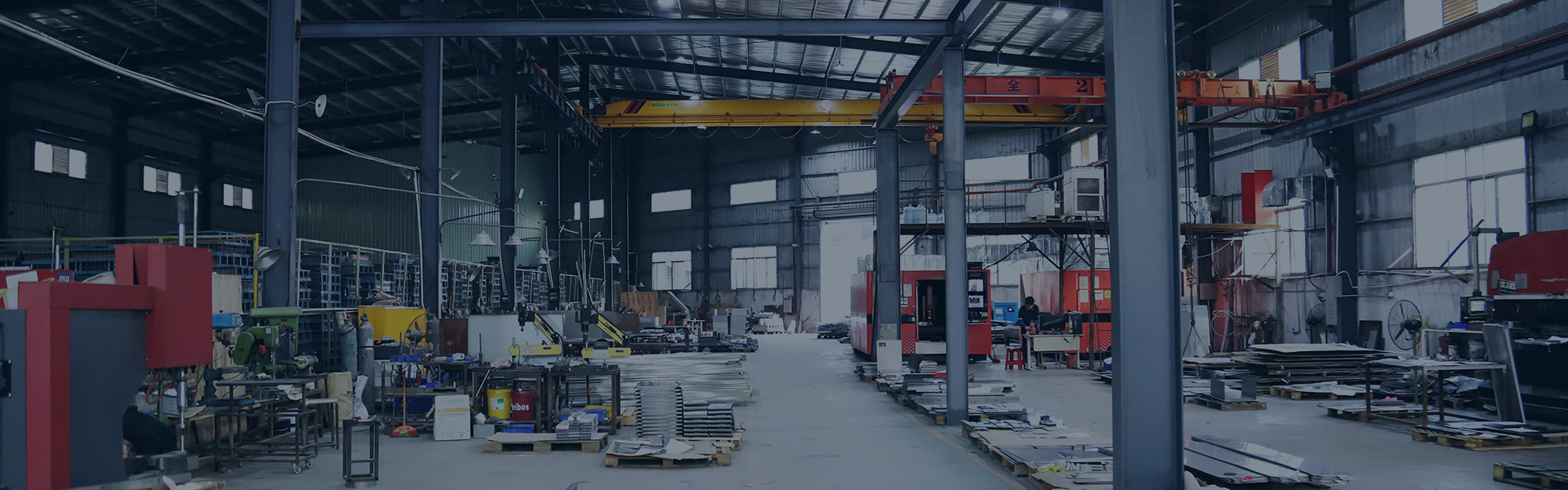
CNC machining technology realizes standardized mass production of high tolerance components. The internal components of smart locks include dozens of small rotary and special-shaped metal parts such as transmission shafts, positioning pins, spring bases, clutch cams, linkage buckles and lock body reinforcing plates, which require high flexibility in cooperation. The factory adopts high-precision CNC lathes and machining centers for integrated manufacturing, selecting loss-resistant metal substrates such as 304 stainless steel, forged brass and aerospace aluminum alloy with uniform hardness and sufficient toughness to withstand repeated friction and slight deformation. During processing, the tolerance range is accurately controlled through programming, with unified edge chamfering and rounded transition to remove metal burrs. It ensures consistent tolerance of each batch of parts and eliminates assembly conflicts caused by disordered tolerances. Meanwhile, stress relief technology is applied to weaken metal tension, granting moderate toughness to internal components to adapt to vibrations and compression generated by daily door opening and closing, and improving application fault tolerance.
Focusing on civil usage pain points, high tolerance internal components greatly optimize the full-cycle user experience. During installation, anti-theft doors, wooden doors and copper doors have uneven opening accuracy, and non-professional punching often leads to hole deviation and oversized apertures. Featuring strong compatibility, high tolerance accessories can adapt to non-standard mounting holes without secondary polishing, reducing installation difficulty and construction cycle, and suiting scenarios such as home decoration and engineering batch installation. In daily use, frequent fingerprint unlocking, password access and automatic door opening drive high-frequency linkage of internal components. Reasonable gaps reduce rigid metal friction, slow down gear wear and weaken mechanical operating noise, realizing quiet door movement suitable for residential environments. In humid southern climates with heavy dew and dry low-temperature northern winters, slight metal thermal expansion and contraction will not cause component jamming, ensuring smooth unlocking all year round.
The high fault-tolerant structure enhances the damage resistance of door locks and extends product service life. Ordinary low-tolerance lock parts tend to suffer from metal wear, shrinking gaps and component tightening after long-term use, resulting in frequent later failures and high maintenance costs. High tolerance CNC internal components reserve scientific wear margins. The fitting gaps remain within a reasonable range after long-term high-frequency friction, avoiding transmission blockage caused by minor wear. Meanwhile, the loosely matched structure buffers impact force from violent prying and door collision, disperses internal pressure and prevents irreversible damage such as shaft fracture, gear tooth breakage and component deformation. In addition, component gaps facilitate air circulation, reduce moisture and dust accumulation, inhibit metal oxidation and rust, keep the internal structure clean and smooth, greatly prolong the overall service life of door locks and cut later maintenance and replacement costs.
It adapts to diversified mass production requirements while balancing quality and cost performance. High tolerance CNC smart lock internal components strictly comply with civil security manufacturing standards. While relaxing reasonable assembly tolerances, the dimensional accuracy of key stressed parts such as lock bolt reinforcements and anti-prying positioning parts is tightly controlled to balance application compatibility and anti-theft safety. The products support standardized mass production, compatible with semi-automatic, fully automatic and push-pull household smart locks, and applicable to apartments, villas, hotels and office buildings. The factory can fine-tune tolerance parameters according to product positioning. With stable bulk supply and no complicated post-processing polishing, it reduces assembly and production costs for lock brands. Featuring outstanding cost performance, the parts are suitable for civil smart locks covering low-end to mid-high-end markets.
Fitting civil usage demands is the core essence of hardware manufacturing. Abandoning the industrial misunderstanding of blindly tightening tolerances, high tolerance CNC smart lock internal components are designed based on real installation conditions, daily usage habits and complex environmental changes, optimizing lock performance through scientifically controlled tolerance configuration. With mature CNC processing technology, premium metal materials and standardized quality control systems, we manufacture highly compatible, fault-tolerant, low-failure and long-lasting internal lock hardware components. In the future, we will continue to delve into the field of civil smart lock accessories, optimize tolerance matching schemes, balance precision and compatibility, and iterate high tolerance processing techniques. We aim to provide cost-effective universal accessories for lock brands, improve the household security experience of global users, and enable smart locks to adapt to more scenarios and serve more families.
 China management center add.
204, Building A, Phase 3, Jiewei Industrial Park, Shangmugu Community, Pinghu Street, Longgang District, Shenzhen, China
 Headquarters tel.
+86 134 3077 5139
 E-mail.


 CN
CN


