

Time:2026-04-24 Views:0
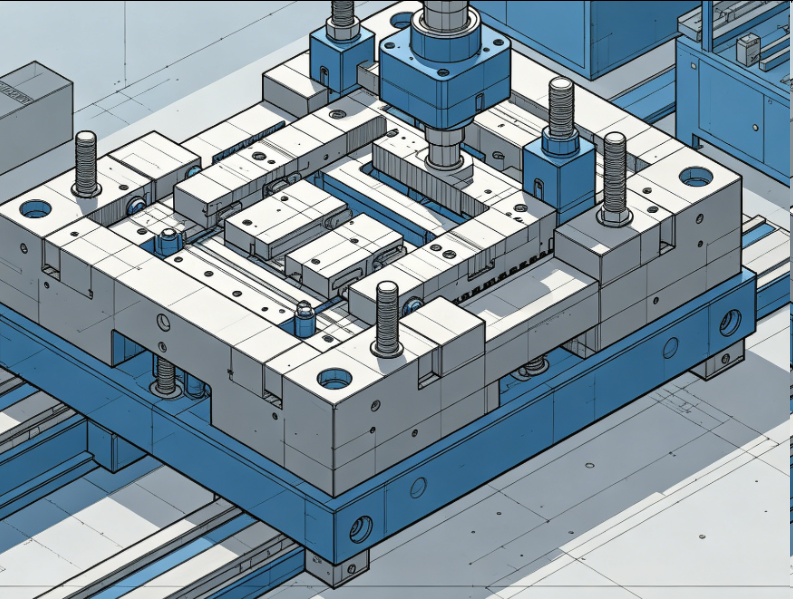
Sheet metal processing mold development is a core link in modern sheet metal manufacturing, which directly determines the precision, efficiency and cost of sheet metal parts production. With the continuous upgrading of industrial manufacturing requirements, especially the increasing demand for high-precision, complex-shaped sheet metal components in automotive, aerospace, electronic equipment and other fields, the development technology of sheet metal molds is constantly innovating and improving. The whole process of mold development includes demand analysis, design, material selection, processing, assembly, debugging and trial production, each link of which requires strict control to ensure that the final mold can meet the actual production needs.
In the design stage of sheet metal molds, advanced CAD/CAM software is widely used to realize parametric modeling and simulation analysis, which can effectively avoid design defects and reduce the risk of mold modification in the later stage. Designers need to fully consider the characteristics of sheet metal materials, such as ductility, strength and thickness, as well as the forming process, such as stamping, bending and punching, to optimize the mold structure, including punch, die, guide mechanism and positioning device. For complex sheet metal parts, finite element analysis (FEA) technology is often used to simulate the forming process, predict possible problems such as material wrinkling, cracking and springback, and adjust the mold design in advance.
Material selection is another key factor affecting mold performance and service life. Common mold materials include Cr12MoV, SKD11, DC53 and other alloy tool steels, which have high hardness, wear resistance and toughness after heat treatment. In addition, surface treatment technologies such as nitriding, chrome plating and PVD coating are often used to improve the surface hardness and wear resistance of the mold, extend its service life and reduce production costs. After the mold is processed and assembled, strict debugging and trial production are required. Through trial stamping, the mold's forming precision, blanking quality and production efficiency are tested, and parameters such as stamping force, speed and stroke are adjusted to ensure that the produced sheet metal parts meet the design standards. With the development of intelligent manufacturing, mold development is gradually integrated with technologies such as 3D printing and digital twin, which further improves the development efficiency and quality of molds and promotes the transformation and upgrading of the sheet metal processing industry.
 China management center add.
204, Building A, Phase 3, Jiewei Industrial Park, Shangmugu Community, Pinghu Street, Longgang District, Shenzhen, China
 Headquarters tel.
+86 134 3077 5139
 E-mail.


 CN
CN


