

Time:2026-03-27 Views:0
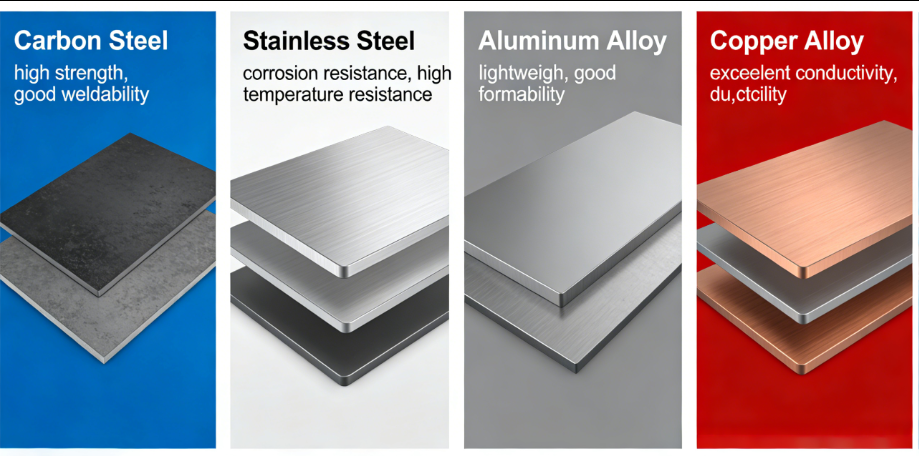
Sheet metal processing materials are the foundation of any sheet metal product, and their selection directly determines the product’s performance, durability, cost, and applicability to specific environments. The most commonly used materials in sheet metal processing include carbon steel, stainless steel, aluminum and its alloys, copper and copper alloys, as well as some special materials such as galvanized steel, cold-rolled steel, and hot-rolled steel. Each material has unique physical and chemical properties that make it suitable for different application scenarios. For example, carbon steel is widely used due to its low cost, good formability, and high strength, making it ideal for structural components, automotive parts, and general industrial equipment. However, carbon steel has poor corrosion resistance, so it often requires surface treatment such as painting or galvanizing to extend its service life in harsh environments.
Stainless steel is another popular material in sheet metal processing, known for its excellent corrosion resistance, high temperature resistance, and aesthetic appearance. The most common types used are 304 and 316 stainless steel; 304 stainless steel is suitable for general corrosive environments such as food processing equipment, medical devices, and decorative products, while 316 stainless steel has better corrosion resistance to acids, alkalis, and saltwater, making it suitable for marine equipment, chemical containers, and offshore structures. Aluminum and its alloys are lightweight, have good thermal conductivity and electrical conductivity, and are easy to process and recycle, which makes them widely used in aerospace, automotive, electronics, and architectural fields. For example, aluminum alloy sheets are often used to make aircraft parts, automotive body panels, and heat exchangers due to their high strength-to-weight ratio.
In addition to these common materials, sheet metal processing also uses special materials according to specific needs. Galvanized steel, which is carbon steel coated with a layer of zinc, combines the strength of carbon steel with the corrosion resistance of zinc, making it suitable for outdoor structures, roofing, and electrical enclosures. Cold-rolled steel has a smooth surface, high dimensional accuracy, and good formability, making it suitable for precision sheet metal parts such as electronic casings and household appliances. Hot-rolled steel, on the other hand, has higher strength and toughness, making it suitable for heavy-duty structural components. The selection of sheet metal materials must consider factors such as the product’s use environment, load-bearing requirements, cost budget, and processing difficulty to ensure the final product meets the design standards and practical needs.
 China management center add.
204, Building A, Phase 3, Jiewei Industrial Park, Shangmugu Community, Pinghu Street, Longgang District, Shenzhen, China
 Headquarters tel.
+86 134 3077 5139
 E-mail.


 CN
CN


