

Time:2025-11-21 Views:0
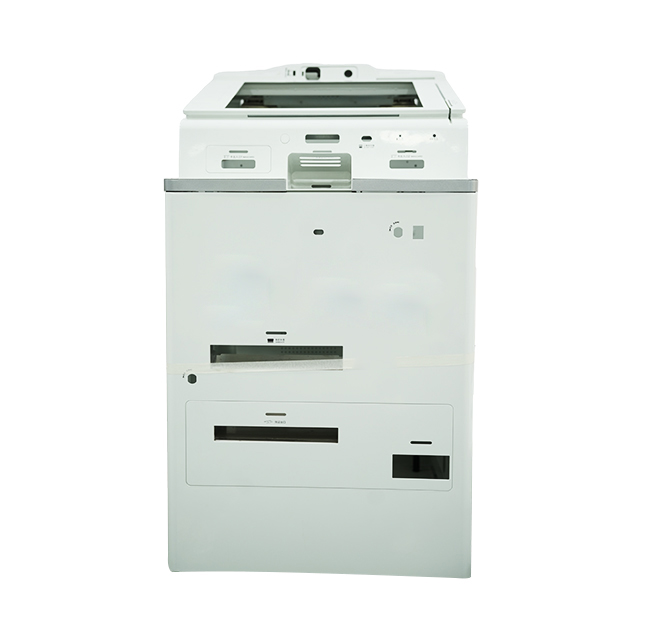
Sheet metal OEM processing is a specialized manufacturing service that focuses on customizing sheet metal components according to the specific design requirements, technical parameters, and brand standards of original equipment manufacturers (OEMs). Unlike standard sheet metal production, which offers pre-designed parts, OEM processing emphasizes close collaboration with clients to develop tailored solutions—making it ideal for industries such as automotive, aerospace, electronics, and industrial machinery, where components must integrate seamlessly with the OEM’s end products.
The core advantage of sheet metal OEM processing lies in its high degree of customization. The process begins with a detailed analysis of the OEM’s needs: engineers review 3D models, 2D drawings, and material specifications (e.g., aluminum, stainless steel, galvanized steel) to determine the optimal processing route. Common techniques include laser cutting (for precision shaping of complex geometries), CNC punching (for fast hole drilling and slotting), bending (using CNC press brakes to achieve accurate angles, often within ±0.1mm tolerance), welding (TIG, MIG, or spot welding for structural assembly), and surface treatment (powder coating, galvanizing, or painting to enhance durability and aesthetics). For example, an automotive OEM may require a custom sheet metal bracket for its electric vehicle (EV) battery pack—OEM processors will use 1.5mm stainless steel, laser-cut the bracket to match the battery’s contour, bend it to 90° angles at 8 specific points, and apply an anti-corrosion powder coat to meet the EV’s 10-year lifespan requirement.
Quality control is a critical pillar of sheet metal OEM processing. Reputable providers implement strict inspection protocols at every stage: laser-cut parts are checked for dimensional accuracy using coordinate measuring machines (CMMs); bent components are verified with angle gauges; and welded joints undergo ultrasonic testing to detect internal defects. This ensures that each part meets the OEM’s quality standards (e.g., ISO 9001, IATF 16949 for automotive) and avoids costly rework or product failures. For instance, a medical device OEM requiring sheet metal housings for diagnostic equipment will need parts that meet FDA standards—OEM processors will use biocompatible materials and conduct surface finish tests to ensure no contaminants leach from the metal.
Scalability and flexibility are also key strengths. Sheet metal OEM processing can accommodate both small-batch prototypes (as few as 10 parts for product testing) and large-volume production (10,000+ parts monthly for mass-market products). Advanced manufacturers use automated production lines (with robotic arms for welding and material handling) to maintain consistency across batches, while still allowing for design adjustments—critical for OEMs that may refine their products during the development cycle. For example, a consumer electronics OEM may first order 50 prototype sheet metal chassis for a new laptop, then adjust the design to reduce weight by 10%, and finally scale up to 50,000 units monthly for launch.
sheet metal OEM processing is a collaborative, precision-driven service that empowers OEMs to create high-quality, custom components tailored to their end products. Its focus on customization, quality, and scalability makes it indispensable for industries where performance, reliability, and brand consistency are non-negotiable.
 China management center add.
204, Building A, Phase 3, Jiewei Industrial Park, Shangmugu Community, Pinghu Street, Longgang District, Shenzhen, China
 Headquarters tel.
+86 134 3077 5139
 E-mail.


 CN
CN


