

Time:2026-01-30 Views:0
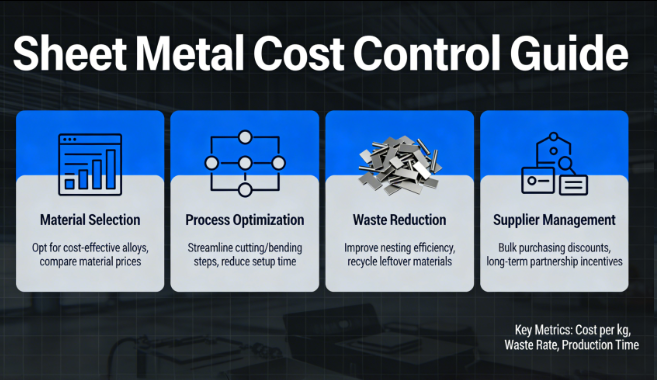
Cost control is a critical priority in sheet metal manufacturing, where profit margins are often constrained by material expenses, labor costs, and competitive pricing pressures. Effective cost control strategies span the entire production lifecycle, from material selection and procurement to manufacturing processes and waste management, ensuring that operations remain efficient and economically viable.
Material costs represent the largest expense in sheet metal fabrication, making strategic material management a cornerstone of cost control. This includes optimizing material usage to minimize waste—for example, using nesting software to arrange multiple parts on a single sheet of metal, reducing scrap from cutting operations. Additionally, negotiating bulk purchase agreements with suppliers can lower raw material costs, while substituting high-cost materials with more economical alternatives (e.g., galvanized steel instead of stainless steel for non-corrosive applications) can reduce expenses without compromising quality.
Labor cost control is another key area, achieved through efficient work scheduling, productivity monitoring, and skill development. By accurately calculating man-hours (as discussed earlier) and matching operator skills to tasks, manufacturers can avoid overstaffing and ensure that labor is used effectively. Cross-training employees to handle multiple machines or processes also increases flexibility, reducing downtime caused by operator shortages and improving overall labor efficiency.
Process optimization plays a vital role in cost control by reducing cycle times and minimizing rework. Investing in advanced machinery, such as high-speed laser cutters or automated press brakes, can speed up production and reduce manual labor, lowering per-unit costs. Implementing lean manufacturing principles, such as 5S (Sort, Set in Order, Shine, Standardize, Sustain) and continuous improvement (Kaizen), helps eliminate waste in workflows, from excessive movement of materials to unnecessary inventory buildup.
Energy consumption is an often-overlooked cost factor in sheet metal production, given the high power requirements of cutting, welding, and finishing equipment. Implementing energy-efficient practices, such as scheduling high-energy tasks during off-peak hours, maintaining equipment to ensure optimal performance, and switching to energy-saving machines, can significantly reduce utility bills. Additionally, recycling scrap metal—both internal waste and customer returns—generates revenue and reduces disposal costs, contributing to overall cost control.
Technology also supports cost control through data-driven decision-making. ERP and MES systems track real-time costs across production, providing insights into variances between estimated and actual expenses. This visibility allows managers to identify cost overruns early, adjust processes, and prevent future inefficiencies. Regular cost audits, comparing performance against industry benchmarks, further help refine strategies and maintain a competitive edge in the sheet metal market.
 China management center add.
204, Building A, Phase 3, Jiewei Industrial Park, Shangmugu Community, Pinghu Street, Longgang District, Shenzhen, China
 Headquarters tel.
+86 134 3077 5139
 E-mail.


 CN
CN


