

Time:2026-05-11 Views:0
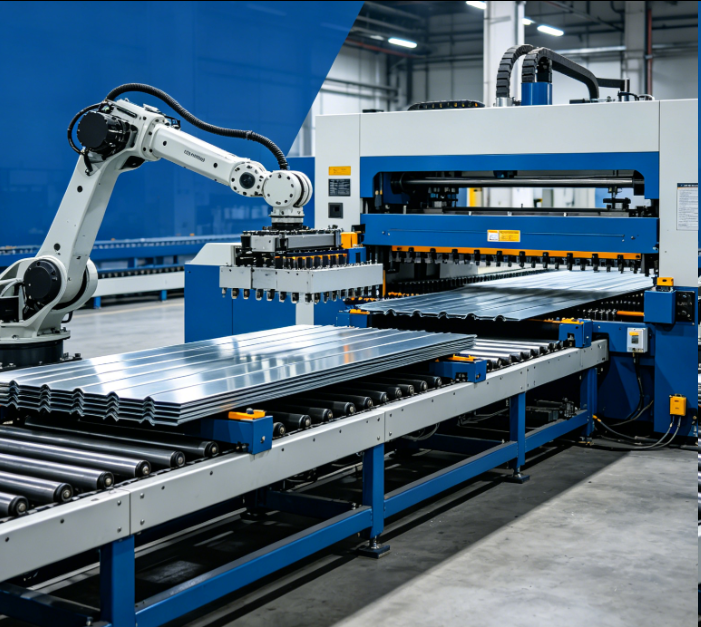
Full-automatic sheet metal processing represents a revolutionary advancement in the manufacturing industry, integrating advanced technologies such as CNC (Computer Numerical Control) systems, robotic arms, and intelligent monitoring to realize a fully automated production process from raw material feeding to finished product output. Unlike traditional manual or semi-automatic processing, this mode minimizes human intervention, greatly improving production efficiency, reducing labor costs, and ensuring consistent product quality. In modern manufacturing workshops, full-automatic sheet metal processing lines typically include automatic coil uncoiling, leveling, laser cutting, CNC bending, welding, polishing, and automatic stacking modules, forming a seamless production workflow that can operate continuously 24 hours a day without fatigue.
The core advantages of full-automatic sheet metal processing lie in its high efficiency, precision, and cost-effectiveness. By adopting intelligent control systems, the processing line can automatically adjust parameters according to different material types, thicknesses, and processing requirements, avoiding errors caused by manual operation and ensuring that each product meets the same quality standards. For example, automatic laser cutting machines equipped with AI-driven path optimization can minimize material waste by up to 15% compared to manual cutting, while robotic welding systems ensure consistent weld quality and reduce defects. Additionally, full-automatic processing significantly shortens production cycles, making it ideal for large-scale batch production in industries such as automotive, electrical equipment, and aerospace. With the continuous integration of Industry 4.0 technologies, full-automatic sheet metal processing is evolving towards smarter and more flexible directions, such as real-time production monitoring, remote operation, and adaptive processing, further enhancing its competitiveness in the global manufacturing market.
 China management center add.
204, Building A, Phase 3, Jiewei Industrial Park, Shangmugu Community, Pinghu Street, Longgang District, Shenzhen, China
 Headquarters tel.
+86 134 3077 5139
 E-mail.


 CN
CN


