

Time:2026-05-20 Views:0
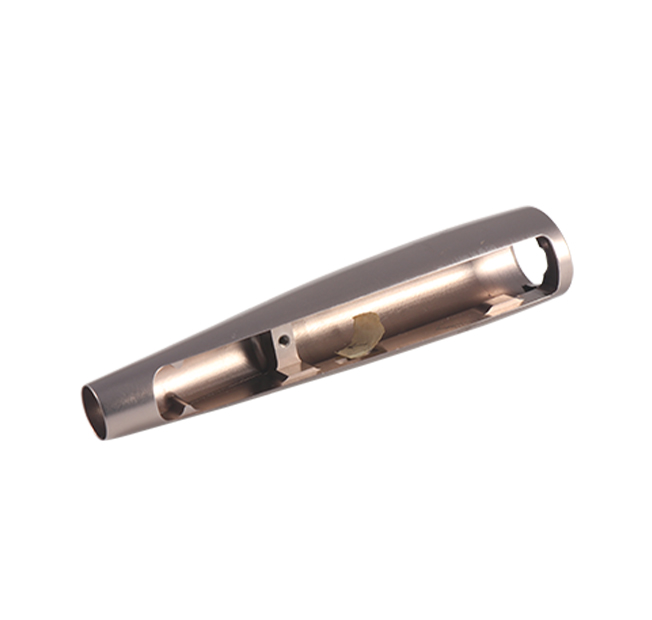
Die casting and precision casting are two important metal forming processes widely used in modern manufacturing, each with unique characteristics, working principles, and application scenarios. Die casting is a metal casting process that involves forcing molten metal into a mold cavity under high pressure and high speed, then allowing it to cool and solidify to form the desired part. The mold used in die casting, known as a die, is typically made of high-strength steel, which can withstand the high temperature and pressure of molten metal, enabling mass production of parts with consistent dimensions and good surface finish. Precision casting, on the other hand, is a general term for casting processes that produce parts with high dimensional accuracy, tight tolerances, and excellent surface quality, including investment casting, lost foam casting, and ceramic mold casting. Unlike die casting, precision casting does not rely on high pressure to fill the mold; instead, it uses precise molds and strict process control to ensure the accuracy of the final product.
In terms of working principles, die casting starts with melting the metal (such as aluminum, zinc, magnesium, or copper alloys) in a furnace to a molten state. The molten metal is then injected into the die cavity through a sprue system using a die casting machine, which applies high pressure (usually between 10 MPa and 150 MPa) to ensure full filling of the cavity, even for parts with complex shapes and thin walls. After the metal solidifies, the die is opened, and the part is ejected. Precision casting, particularly investment casting, follows a different process: a wax pattern of the part is first made, then coated with multiple layers of refractory material to form a shell. The wax is melted and removed to leave a hollow shell, which is then filled with molten metal. After solidification, the shell is broken to obtain the precision casting part. This process allows for extremely complex shapes, including internal cavities and fine details, that are difficult to achieve with die casting.
Applications of the two processes also differ significantly. Die casting is ideal for mass production of small to medium-sized parts with relatively simple to moderately complex shapes, such as automotive components (engine brackets, transmission housings), electronic device casings, and household appliances. Its advantages lie in high production efficiency, low unit cost for large batches, and good surface finish that often requires minimal post-processing. Precision casting, however, is more suitable for parts that require high dimensional accuracy, tight tolerances (often within ±0.05 mm), and complex geometries, such as aerospace components (turbine blades, aircraft engine parts), medical devices, and high-precision mechanical parts. Although precision casting has higher accuracy, its production cycle is longer, and the cost per part is higher, making it less suitable for mass production compared to die casting. Both processes play irreplaceable roles in modern manufacturing, with die casting focusing on efficiency and cost-effectiveness, and precision casting focusing on accuracy and complexity.
 China management center add.
204, Building A, Phase 3, Jiewei Industrial Park, Shangmugu Community, Pinghu Street, Longgang District, Shenzhen, China
 Headquarters tel.
+86 134 3077 5139
 E-mail.


 CN
CN


