

Time:2025-12-02 Views:0
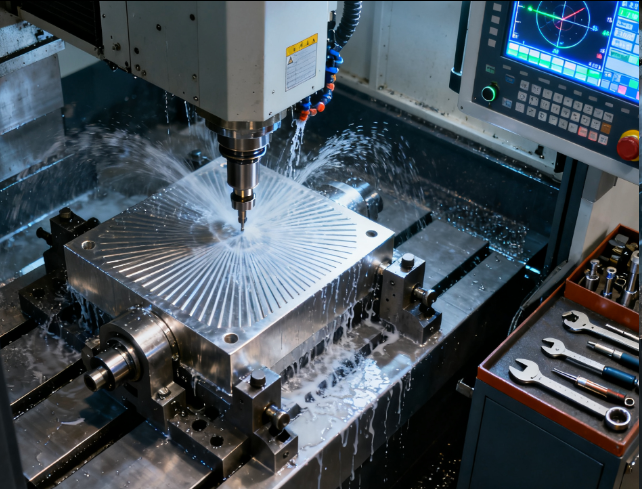
CNC precision machining is a manufacturing process that leverages computer-controlled systems to achieve extremely tight tolerances and high surface finishes. This method involves the removal of material from a workpiece using cutting tools, guided by precise digital instructions. The key advantage of CNC precision machining lies in its ability to consistently produce parts with dimensional accuracies ranging from micrometers to nanometers, depending on the equipment and material.
The process begins with creating a 3D CAD model of the desired part, which is then translated into G-code instructions for the CNC machine. Advanced sensors and feedback systems ensure real-time adjustments, maintaining accuracy even under varying conditions. CNC precision machining is widely used in industries requiring stringent quality standards, such as aerospace, medical implants, and optics, where even minor deviations can lead to catastrophic failures.
To achieve such precision, CNC machines employ high-rigidity structures, ball screw drives, and linear encoders for positional feedback. Additionally, the use of high-speed spindles and advanced tooling materials, such as polycrystalline diamond (PCD), enhances cutting performance and extends tool life. The combination of these technologies enables CNC precision machining to deliver parts with exceptional repeatability, reducing waste and improving overall manufacturing efficiency.
 China management center add.
204, Building A, Phase 3, Jiewei Industrial Park, Shangmugu Community, Pinghu Street, Longgang District, Shenzhen, China
 Headquarters tel.
+86 134 3077 5139
 E-mail.


 CN
CN


