

Time:2026-04-17 Views:0
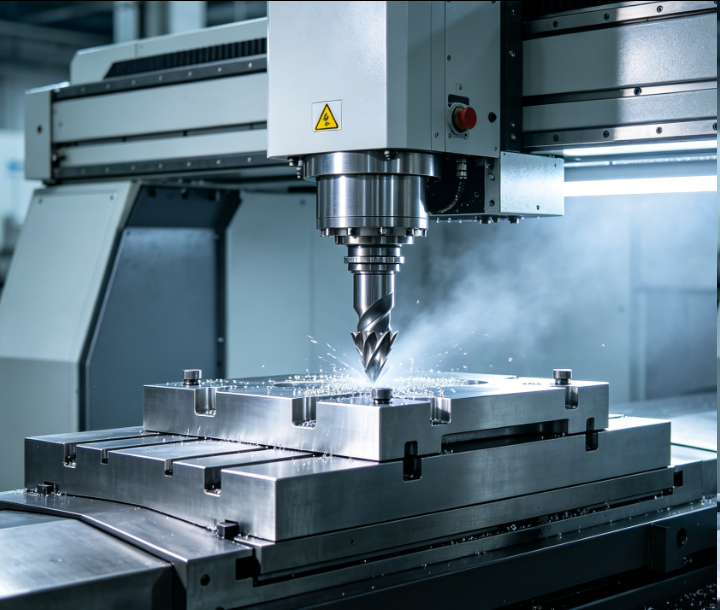
CNC (Computer Numerical Control) machining equipment refers to a class of automated manufacturing tools that use computer programs to control the movement and operation of machining components. Unlike traditional manual machining tools that rely on human operation for every step, CNC equipment interprets digital instructions, typically generated by CAD (Computer-Aided Design) and CAM (Computer-Aided Manufacturing) software, to perform precise cutting, shaping, drilling, and finishing of various materials. This automation not only eliminates human errors but also ensures consistent and repeatable production, making it an indispensable backbone of modern manufacturing industries ranging from aerospace and automotive to medical devices and electronics.
The core components of CNC machining equipment include the machine control unit (MCU), which serves as the "brain" of the system to process program instructions and convert them into mechanical movements; the drive system, which powers the motion of axes (such as X, Y, Z axes and rotational axes) with high precision; and the machining unit, which includes spindles, tool holders, and worktables to carry out the actual machining operations. Modern CNC equipment can handle a wide range of materials, including metals, plastics, wood, and composites, and can be configured into various types such as lathes, milling machines, machining centers, and grinders to meet diverse production needs. With the integration of advanced technologies like 5-axis control, real-time monitoring, and intelligent diagnostics, CNC machining equipment continues to evolve, offering higher efficiency, precision, and flexibility to adapt to the increasingly complex demands of modern manufacturing.
Another key advantage of CNC machining equipment is its ability to operate continuously for long periods with minimal supervision, significantly improving production throughput and reducing labor costs. The programmable nature of CNC systems allows for easy adjustment of machining parameters, enabling quick switching between different workpieces and reducing setup time. Additionally, CNC equipment can achieve tight tolerances and high surface finishes that are difficult to attain with manual machining, ensuring the quality and reliability of the final products. As Industry 4.0 advances, CNC machining equipment is also being integrated with IoT (Internet of Things) technologies, enabling remote monitoring, predictive maintenance, and seamless integration into smart production lines, further enhancing its role in the global manufacturing landscape.
 China management center add.
204, Building A, Phase 3, Jiewei Industrial Park, Shangmugu Community, Pinghu Street, Longgang District, Shenzhen, China
 Headquarters tel.
+86 134 3077 5139
 E-mail.


 CN
CN


