

Time:2026-05-19 Views:0
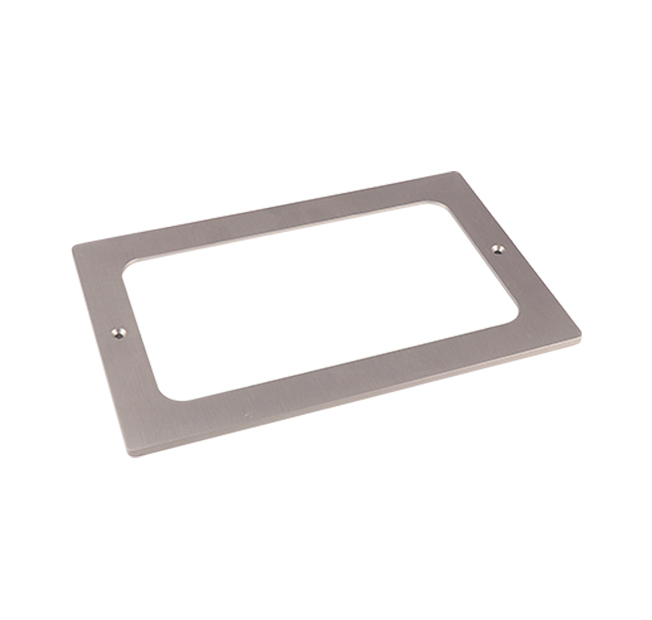
CNC milling batch production is a cornerstone of modern precision manufacturing, designed to produce large volumes of identical parts with consistent quality, tight tolerances, and high efficiency. Unlike small-batch or one-off production, batch manufacturing leverages the automation and repeatability of CNC milling machines to minimize human error, reduce production time, and lower unit costs—making it ideal for industries that require mass-produced components, such as automotive, aerospace, electronics, and medical device manufacturing. By pre-programming computer numerical control (CNC) instructions, manufacturers can ensure that every part off the production line meets the exact design specifications, eliminating variations that often occur with manual machining processes.
The workflow of CNC milling batch production involves several key steps to ensure efficiency and consistency. First, engineers analyze the part design and optimize it for batch manufacturing, considering factors such as material selection, tool paths, and machining parameters to reduce waste and shorten cycle times. Next, the design is converted into machine-readable G-code using advanced CAD/CAM software, which guides the CNC milling machine’s cutting tools to remove material from raw workpieces with precision. Once the machine is set up and calibrated with a test part, full-scale batch production begins, with automated systems monitoring the process to detect any deviations and ensure continuous operation.
One of the primary advantages of CNC milling batch production is its scalability and cost-effectiveness. As production volume increases, the unit cost of each part decreases significantly, thanks to reduced setup time, optimized material usage, and automated operation that requires minimal human intervention. Additionally, modern CNC milling machines—equipped with multi-axis capabilities, high-speed cutting tools, and real-time quality control systems—can handle complex part geometries and tight tolerances (as low as ±0.005 mm) even in high-volume runs. This makes CNC milling batch production indispensable for meeting the demands of large-scale manufacturing while maintaining the highest standards of precision and reliability across industries worldwide.
 China management center add.
204, Building A, Phase 3, Jiewei Industrial Park, Shangmugu Community, Pinghu Street, Longgang District, Shenzhen, China
 Headquarters tel.
+86 134 3077 5139
 E-mail.


 CN
CN


