

Time:2026-01-23 Views:0
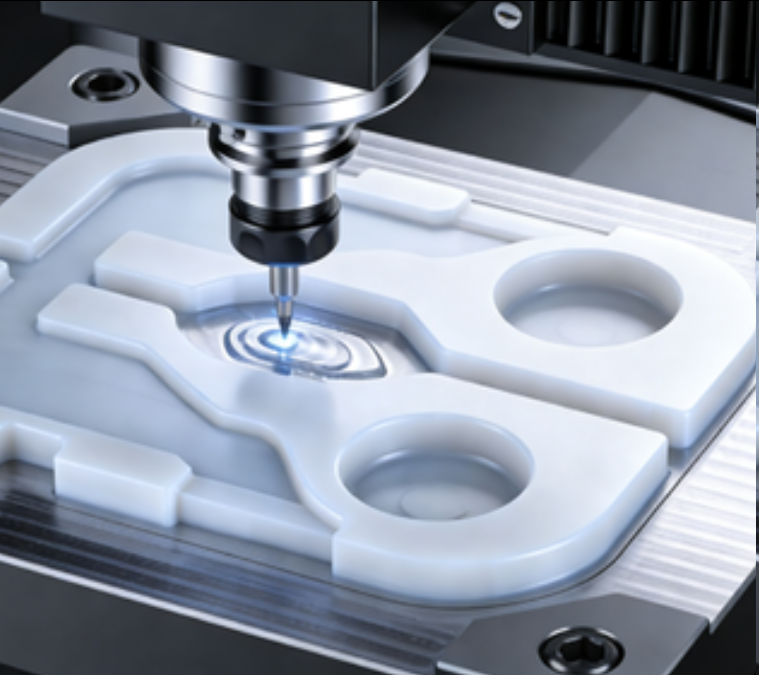
CNC (Computer Numerical Control) machining of engineering plastic parts has become an increasingly popular manufacturing method due to its ability to produce high - precision, complex - shaped components with consistent quality. Engineering plastics are a group of high - performance polymers that offer excellent mechanical, thermal, and chemical properties, making them suitable for a wide range of applications in industries such as automotive, aerospace, electronics, and medical.
One of the key advantages of using CNC machining for engineering plastic parts is the precision it offers. The computer - controlled nature of the process allows for extremely accurate cutting, drilling, and milling operations, with tolerances often within a few micrometers. This precision is crucial for parts that require tight fits, such as gears, bearings, and connectors. For example, in the automotive industry, engineering plastic parts like engine components or interior trim pieces need to be manufactured with high precision to ensure proper assembly and functionality.
When machining engineering plastics, different types of cutting tools are used depending on the specific material and the desired machining operation. Carbide - tipped tools are commonly preferred due to their high hardness and wear resistance, which can effectively cut through tough engineering plastics without dulling quickly. However, the choice of tool geometry also plays a significant role. For instance, sharp - edged tools with a small rake angle are often used to minimize heat generation during machining, as excessive heat can cause the plastic to melt or deform.
The machining parameters, including spindle speed, feed rate, and depth of cut, need to be carefully optimized for engineering plastics. Unlike metals, engineering plastics have lower thermal conductivity, so heat generated during machining can accumulate rapidly and lead to surface defects. To address this, lower spindle speeds and feed rates are typically employed to reduce heat generation. Additionally, proper cooling and lubrication strategies are essential. Some engineering plastics can be machined dry, while others may require the use of coolants or lubricants to improve the surface finish and extend the tool life.
Another important aspect is the post - machining treatment of engineering plastic parts. Depending on the application, parts may need to be deburred, polished, or surface - treated to enhance their performance. For example, in the medical industry, parts used in surgical instruments or implants may require a high - quality surface finish to meet strict hygiene and biocompatibility requirements. CNC - machined engineering plastic parts can also be easily customized according to specific design requirements, allowing for the production of parts with unique shapes, sizes, and features.
 China management center add.
204, Building A, Phase 3, Jiewei Industrial Park, Shangmugu Community, Pinghu Street, Longgang District, Shenzhen, China
 Headquarters tel.
+86 134 3077 5139
 E-mail.


 CN
CN


