

Time:2026-04-23 Views:0
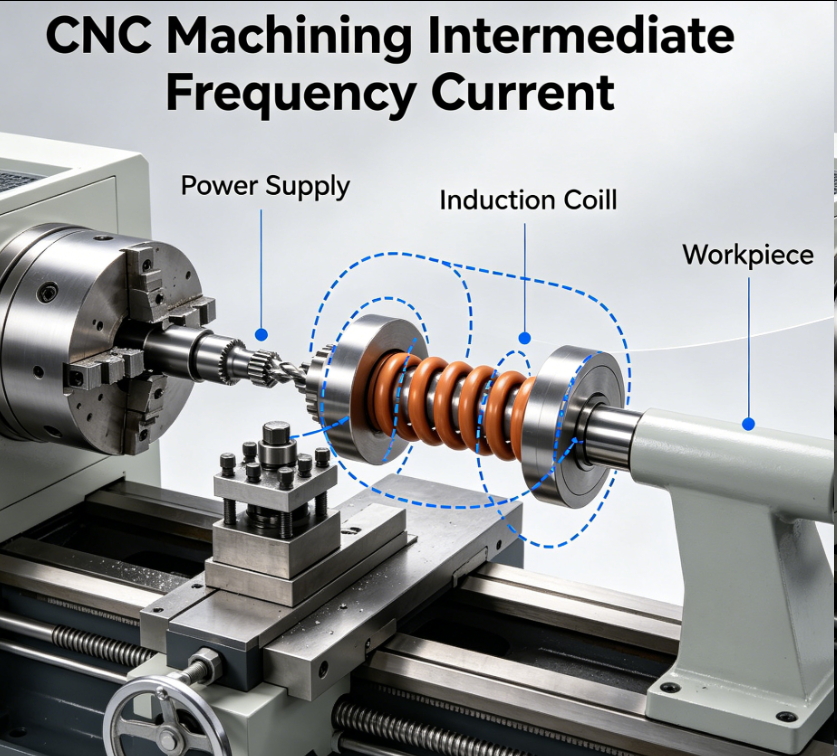
Intermediate frequency (IF) current plays a crucial role in modern CNC machining, especially in processes that require precise heat treatment, induction hardening, or assisted material removal. Unlike low-frequency or high-frequency currents, intermediate frequency currents—typically ranging from 1 kHz to 100 kHz—strike a balance between penetration depth and heating efficiency, making them ideal for enhancing the mechanical properties of CNC-machined components. In CNC machining, IF current is often integrated into specialized equipment, such as induction heating systems, which work in tandem with CNC controllers to ensure consistent and accurate heat application during the machining process. This integration allows for real-time adjustment of current intensity, frequency, and heating duration, aligning with the precise requirements of different materials and part geometries.
One of the primary applications of intermediate frequency current in CNC machining is induction hardening, a heat treatment process that strengthens the surface of metal components while maintaining their core toughness. For example, CNC-machined gears, shafts, and tool bits often undergo IF induction hardening to improve wear resistance and fatigue strength. The IF current generates eddy currents within the metal part, heating the surface to austenitizing temperatures (typically 800–1000°C) before rapid quenching. The CNC system controls the movement of the induction coil relative to the part, ensuring uniform heating across complex surfaces and tight tolerances—critical for parts that operate under high stress or friction. Additionally, IF current is used in CNC EDM (Electrical Discharge Machining) as an auxiliary power source, where it helps stabilize the discharge arc and improve material removal rates, particularly for hard-to-machine materials like titanium alloys and tool steels.
The advantages of using intermediate frequency current in CNC machining are numerous. Compared to high-frequency currents, IF currents offer deeper heat penetration, making them suitable for larger parts or components that require uniform hardening across thicker sections. They also consume less energy than low-frequency currents, reducing operational costs while maintaining processing efficiency. Furthermore, the precise control afforded by CNC integration ensures repeatability, a key requirement in mass production where consistent part quality is essential. As CNC machining continues to evolve toward higher precision and versatility, intermediate frequency current systems are becoming increasingly sophisticated, with advanced feedback mechanisms that monitor temperature, current, and part position in real time to optimize the machining process and reduce defects.
 China management center add.
204, Building A, Phase 3, Jiewei Industrial Park, Shangmugu Community, Pinghu Street, Longgang District, Shenzhen, China
 Headquarters tel.
+86 134 3077 5139
 E-mail.


 CN
CN


