

Time:2026-01-17 Views:0
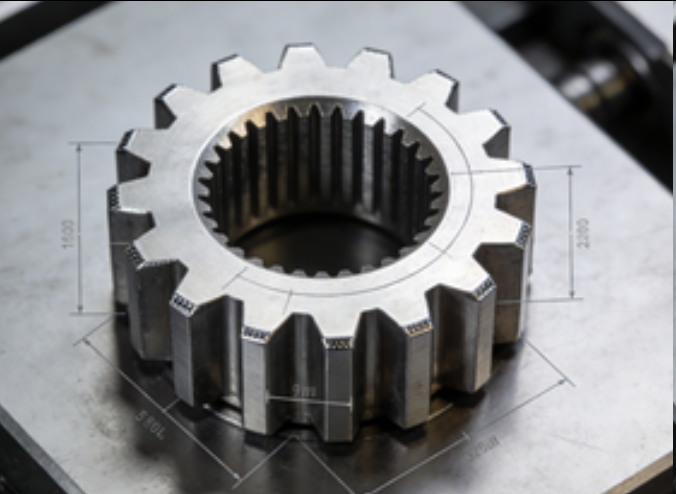
CNC (Computer Numerical Control) machined parts have revolutionized the manufacturing industry by enabling the production of highly complex and precise components with repeatable accuracy. These parts are created through a process where computer - controlled machine tools, such as milling machines, lathes, and routers, follow pre - programmed instructions to remove material from a workpiece, shaping it into the desired form.
The versatility of CNC machining is one of its greatest strengths. It can work with a wide range of materials, including metals like aluminum, steel, and titanium, as well as plastics, composites, and wood. This makes CNC machined parts suitable for various industries, from aerospace and automotive to medical and consumer electronics. In the aerospace industry, for example, CNC - machined titanium parts are used to construct lightweight yet strong components for aircraft structures, ensuring safety and fuel efficiency. In the medical field, CNC - machined parts are employed to create custom - made implants that fit precisely to a patient's anatomy, enhancing the success rate of surgeries.
Another significant advantage of CNC machined parts is their ability to achieve intricate geometries. Traditional machining methods often have limitations when it comes to producing complex shapes, but CNC machines can easily handle designs with complex curves, deep cavities, and fine details. Using advanced CAD (Computer - Aided Design) and CAM (Computer - Aided Manufacturing) software, engineers can design parts with extreme precision and then translate those designs into machine - readable instructions. This allows for the production of parts that were previously impossible or extremely difficult to manufacture, opening up new possibilities for product innovation.
The quality control of CNC machined parts is also highly reliable. Once the machining program is set up correctly, the machine will repeat the same operations with consistent accuracy, minimizing human error. Sensors and measuring devices can be integrated into the CNC machining process to monitor parameters such as tool position, cutting speed, and feed rate in real - time. If any deviations from the programmed values are detected, the machine can automatically adjust or stop the operation to prevent defective parts from being produced. This ensures that each CNC - machined part meets the strict quality standards required by modern industries, reducing the need for extensive post - machining inspection and rework.
 China management center add.
204, Building A, Phase 3, Jiewei Industrial Park, Shangmugu Community, Pinghu Street, Longgang District, Shenzhen, China
 Headquarters tel.
+86 134 3077 5139
 E-mail.


 CN
CN


